Search behaviour is changing rapidly, and brands that rely heavily on website traffic are already feeling the impact. As AI-powered search experiences expand, traditional referral traffic from search engines continues to decline, forcing marketers and PR professionals to rethink where visibility is earned.
At the same time, new opportunities are emerging. One of the most notable shifts is LinkedIn’s growing role as a trusted source for AI-generated responses, positioning the platform as a powerful visibility channel in the evolving search landscape.
The Reality of Declining Website Traffic
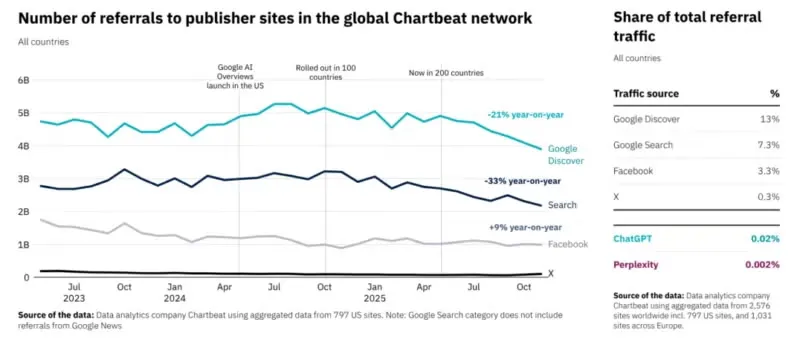
Recent industry data shows a consistent drop in referral traffic from traditional search. As AI previews and in-search answers become more common, many users now get the information they need without clicking through to a website.
While Google maintains that overall click quality remains stable, publishers and brands across industries are reporting noticeable declines in organic traffic. This shift doesn’t signal the end of SEO, but it does confirm that search visibility is no longer limited to websites alone.
Why AI Is Turning to LinkedIn
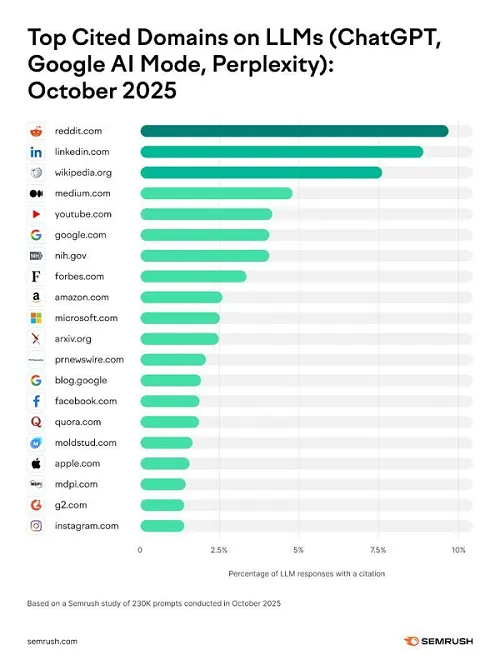
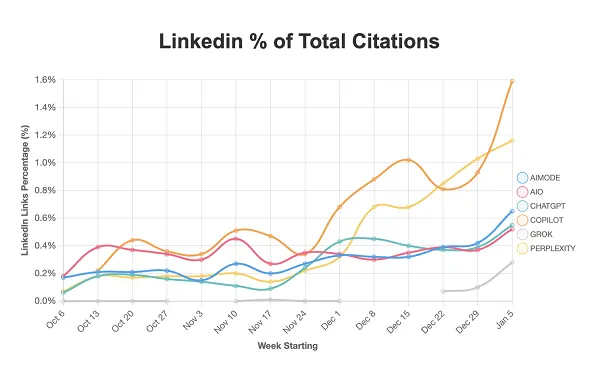
New studies reveal that AI tools such as ChatGPT, Google AI, and Perplexity are increasingly citing LinkedIn content—particularly LinkedIn Pulse articles—when generating answers.
In fact, LinkedIn is now one of the most frequently cited platforms in AI responses, trailing only Reddit. This suggests that AI systems view LinkedIn as a reliable, authoritative source of professional insight and real-world expertise.
Several factors likely contribute to this trust:
- Verified profiles linked to real professionals
- Clear author attribution and career history
- Industry-specific thought leadership content
- Consistent publishing within professional networks
For AI models designed to surface credible, human-backed information, LinkedIn offers strong authority signals.
What This Means for SEO and GEO
This trend reinforces the growing importance of Generative Engine Optimization (GEO) alongside traditional SEO. While SEO focuses on ranking websites, GEO focuses on being cited and referenced by AI systems, wherever those systems source their answers.
LinkedIn now plays a dual role:
- A professional networking platform
- A discovery and citation source for AI-driven search
For brands and executives, this means visibility is increasingly tied to expertise sharing, not just keyword-optimized web pages.
How Brands Should Adapt Their Digital Marketing Strategy
To stay competitive, digital marketing strategies must extend beyond owned websites and include authoritative third-party platforms like LinkedIn.
An effective approach includes:
- Publishing thought leadership articles on LinkedIn Pulse
- Keeping executive and brand profiles updated and verified
- Aligning LinkedIn content with industry search questions
- Supporting content with PR, media mentions, and social engagement
This integrated strategy strengthens both SEO and GEO, increasing the likelihood of appearing in AI-generated answers while maintaining brand credibility.
The Role of PR and Content Authority
Public relations is becoming more central in the AI era. AI engines prioritize consistent brand narratives, credible authors, and expert commentary—areas where PR-led content excels.
When PR, content writing, and social media strategy work together, they create a strong digital footprint that AI systems can recognize and trust. LinkedIn content, when supported by media coverage and authoritative messaging, becomes even more powerful.
How 360 Chartered PR Consultants Supports AI-Era Visibility
At 360 Chartered PR Consultants, we help brands adapt to the evolving digital landscape through:
- Strategic public relations and digital PR
- SEO and GEO-focused content writing
- Thought leadership and LinkedIn content strategy
- Social media management and social listening
- Integrated digital marketing and branding solutions
Our goal is to ensure that brands remain visible not only in search results, but also in AI-generated answers that increasingly shape discovery and decision-making.
Final Thoughts
The rise of LinkedIn as a trusted AI citation source highlights a fundamental shift in how visibility is earned online. As traditional traffic declines, authority, expertise, and platform diversification become essential.
Brands that stay informed and adapt early—by combining SEO, GEO, PR, and digital marketing—will be best positioned to succeed in the next evolution of search.
Source: Social Media Today
Find more information here: https://bit.ly/360PR_blog
For more information contact us at: team@360pr.pixxels.dev