Artificial intelligence is rapidly redefining how consumers search, discover, and purchase online. Now, Google is taking the next step by integrating AI more deeply into its advertising ecosystem.
In a recent update outlining Google’s advertising roadmap, the company previewed several AI-powered innovations that will reshape how brands appear in search results, AI-generated answers, shopping experiences, and creator collaborations.
For businesses investing in digital marketing and paid advertising, these developments are more than technical upgrades. They signal a structural shift in how visibility and performance will be earned in the AI era.
Ads Inside AI Responses
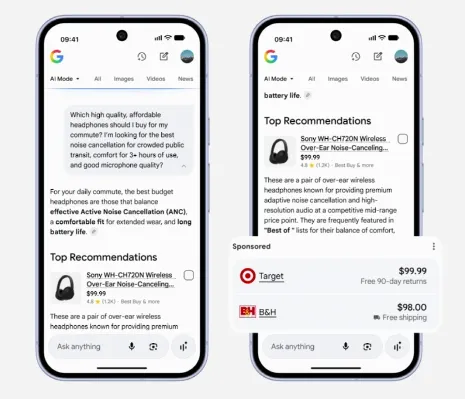
One of the most significant updates is the introduction of sponsored placements within AI-generated answers in Search. As users increasingly rely on AI summaries instead of traditional search results, Google is creating new ad formats that align directly with AI responses.
These ads will display relevant product matches connected to the user’s query and clearly marked as “Sponsored.” Rather than appearing separately in a list of links, they will integrate contextually with AI-generated content.
This move reflects an important reality: as AI answers reduce traditional click-through behavior, advertising must evolve to remain visible within conversational and synthesized search environments.
For brands, this represents a new opportunity to:
- Capture high-intent users at the decision stage
- Align product promotions with contextual AI insights
- Maintain visibility as search behavior shifts
AI-Powered Direct Offers
Google is also expanding its Direct Offers functionality, allowing businesses to present tailored deals within AI-generated responses. Instead of generic promotions, brands can match specific offers to the user’s intent and context.
This supports a more personalized advertising experience, where promotions feel aligned with the consumer’s immediate need rather than interruptive.
In performance marketing terms, this could significantly improve conversion potential, as AI-driven context improves targeting precision.
AI Agents and Seamless Shopping Experiences
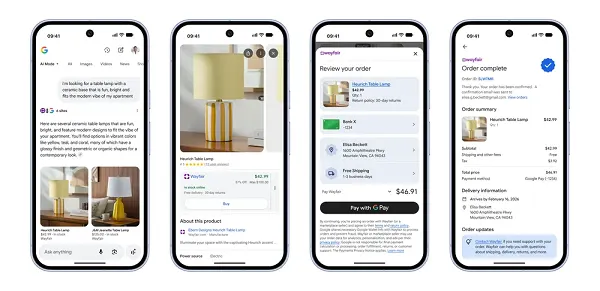
Beyond ads, Google is investing heavily in AI agent integration. Through its Universal Checkout Protocol (UCP), users can complete purchases directly within AI-powered environments such as Search AI Mode and the Gemini app.
This creates a frictionless shopping experience where discovery, evaluation, and purchase happen within the same interface.
For digital marketers, this signals a critical shift:
The customer journey is becoming shorter and more automated. Brands must ensure that product feeds, pricing structures, and checkout systems are optimized for AI-integrated environments.
Advertising, content strategy, and ecommerce optimization will need to work in sync to capture these opportunities.
AI Matching for Creator Collaborations
Google is also enhancing its Open Call process, which enables brands to request user-generated content from creators. By using AI to match brands with relevant creators, Google aims to streamline influencer and UGC partnerships.
This reflects the growing convergence between:
- Performance marketing
- Influencer marketing
- Social commerce
- AI-powered audience analysis
Creator partnerships are no longer purely relationship-driven—they are increasingly data-driven and algorithmically matched.
What This Means for Digital Marketing Strategy
Google’s updates highlight a major trend: AI is not just assisting advertising—it is restructuring it.
Traditional SEO, paid search, ecommerce optimization, and influencer marketing are now interconnected through AI systems that interpret intent, context, and behavior in real time.
For brands, this means:
- Advertising strategies must account for AI search visibility
- Product data and structured content must be optimized
- Campaigns must align with evolving AI discovery pathways
- Marketing teams must continuously monitor platform innovations
Staying updated is not a competitive advantage anymore—it is a necessity.
The Importance of Adaptability in the AI Era
AI-powered infrastructure is expensive and resource-intensive. As platforms like Google continue investing heavily in AI development, monetization through advertising will accelerate.
If these AI ad placements prove effective, similar integrations are likely to expand across other platforms. Businesses that understand and adapt early will gain positioning advantages before competition increases.
This is where strategic oversight becomes essential. Automation and AI tools can enhance efficiency, but they require informed direction and structured digital marketing planning.
How 360 Chartered PR Consultants Supports AI-Driven Advertising
At 360 Chartered PR Consultants, we help brands navigate rapid technological shifts through integrated digital marketing strategy, paid advertising management, content creation, public relations, branding, and social media consulting.
Our approach ensures that businesses are not simply reacting to platform updates—but proactively aligning campaigns with emerging AI-powered ecosystems.
By combining data-driven advertising with strategic brand positioning, we help companies remain visible, competitive, and adaptable in an evolving digital landscape.
Final Thoughts
Google’s AI-powered advertising innovations represent a clear turning point. Search is becoming conversational. Shopping is becoming integrated. Discovery is becoming predictive.
For brands, the message is clear: digital marketing strategies must evolve alongside AI.
Those who stay informed, adapt quickly, and integrate AI into their performance marketing approach will be best positioned to thrive in the next generation of search and advertising.
Source: Social Media Today
Find more information here: https://bit.ly/360PR_blog
For more information contact us at: team@360pr.pixxels.dev